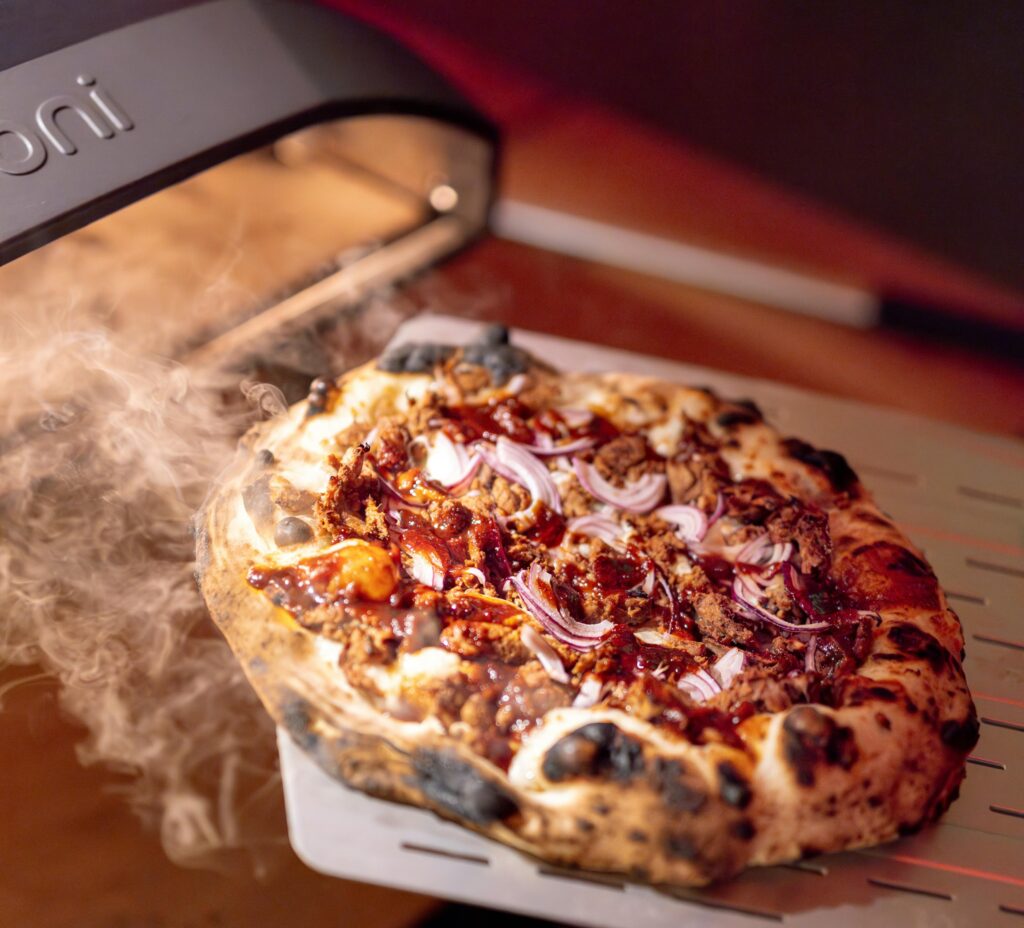
Do you need a 900 degree pizza oven? Many home pizza ovens advertise the ability to reach 900 degrees or higher. For buyers comparing options, that number often becomes a deciding factor.
The real question isn’t whether 900 degrees is impressive.
It’s whether you actually need that level of heat for the way you plan to cook pizza at home.
This guide answers that directly—without introducing extra specs or second-guessing.
Why 900 Degrees Is Even Mentioned
High temperatures are associated with traditional Neapolitan-style pizza, which cooks very quickly at extreme heat.
A 900-degree oven allows for:
- Very short cook times
- Rapid oven spring
- Distinctive charring patterns
- Neapolitan style pizza
Because of this, many home ovens highlight their maximum temperature as a way to signal they belong in the high-heat pizza category.
If you want to see how popular home pizza ovens compare—by size, fuel type, and intended use—you can view them side by side here: pizza oven comparison table.
That makes max temperature a useful reference point—but not always a requirement.
When a 900 Degree Pizza Oven Makes Sense
You are more likely to benefit from a 900-degree pizza oven if you:
- Intentionally want Neapolitan-style pizza
- Prefer very fast cooks with active turning
- Enjoy high-heat, hands-on cooking
- Plan short, focused pizza sessions
In these cases, the ability to reach very high temperatures aligns with how you want to cook. The oven’s full capability is actually used.
When 900 Degrees Is Not Necessary
Many home cooks do not routinely use temperatures that high.
You may not need a 900-degree oven if you:
- Prefer slightly longer cook times
- Make pizza casually or occasionally
- Cook for family meals rather than technique-focused sessions
- Want a more forgiving cooking window
In these situations, lower—but still high—temperatures can produce excellent pizza without pushing the oven to its limits.
This does not limit quality. It changes pace and control, not outcomes.
What Really Matters More Than the Number
Maximum temperature tells you what an oven can reach, not how it must be used.
For home use, other factors usually shape the experience more:
- Pizza size capacity
- Fuel type and convenience
- How many pizzas you cook per session
- Available outdoor space
An oven capable of 900 degrees does not require you to cook at 900 degrees every time. It simply gives you headroom.
Does Choosing 900 Degrees Lock You Into One Style?
No.
High-heat pizza ovens are versatile by design. You can:
- Cook at lower temperatures when you want more control
- Adjust pacing for different session lengths
- Use the oven across multiple pizza styles
The presence of a high maximum temperature does not restrict how the oven is used day to day.
How to Decide Without Overthinking It
A simple way to decide is to ask:
Do I want the option to cook at extreme heat, even if I don’t use it every time?
- If yes, a 900-degree-capable oven makes sense
- If no, you can still cook great pizza without targeting that number
Both paths lead to excellent results when matched to how you cook.
Compare High-Heat Pizza Ovens by Use Case
If you want to see how popular home pizza ovens compare—by size, fuel type, and intended use—you can view them side by side here: pizza oven comparison table.
That comparison helps you decide whether extreme heat capability fits your needs or is simply an optional bonus.
Final Answer
You do not need a 900 degree pizza oven to make great pizza at home.
You might want one if high-heat cooking is central to how you plan to cook.
Otherwise, many home cooks find that flexibility and comfort matter more than chasing a specific temperature number.
Once you know your cooking style, the right choice becomes clear.