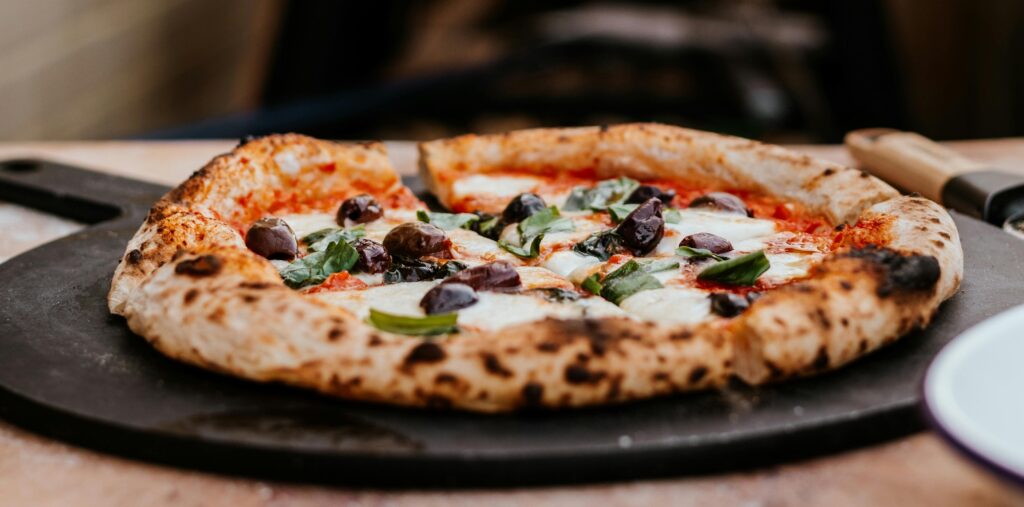
Choosing between the Ooni Koda 16 vs Ooni Karu 12 can be confusing. Both are extremely popular pizza ovens, and both are capable of making excellent pizza at home. The key difference comes down to how you like to cook and how much effort you want to put into the process.
If you want to see how these ovens compare to other top options, see our full pizza oven comparison table.
See our full pizza oven comparison table for more options.
Quick Comparison: Koda 16 vs Karu 12
| Feature | Ooni Koda 16 | Ooni Karu 12 |
| Fuel | Propane gas | Wood / charcoal (optional gas) |
| Max pizza size | 16″ | 12″ |
| Heat-up time | ~20 minutes | ~30+ minutes |
| Ease of use | Very easy | Moderate learning curve |
| Best for | Most home cooks | Wood-fire enthusiasts |
Ooni Koda 16 Overview — Best for Most Home Cooks
Why people choose the Koda 16
- Fast, consistent heat
- No fire management
- Large pizza capacity
- Excellent for weeknight cooking
Pros
- Simple propane setup
- Very predictable results
- Easy for beginners
- Great for families or entertaining
Cons
- Requires propane tank
- Less “traditional” than wood
The Ooni Koda 16 is available in both propane and natural gas versions, but most buyers choose propane for portability and ease of setup.
If you want to compare the Ooni Koda 16 and Karu 12 with other top pizza ovens, see our full pizza oven comparison table.
Ooni Karu 12 Overview — Best for Wood-Fired Flavor
Why people choose the Karu 12
- Traditional cooking experience
- Wood-fired flavor and char
- More hands-on control
Pros
- Authentic wood-fired taste
- Very high heat potential
- Flexible fuel options
Cons
- Longer setup time
- More learning required
- Smaller cooking surface
Which One Should You Choose?
Choose Ooni Koda 16 if:
- You want fast, reliable results
- You cook pizza regularly
- You don’t want to manage a fire
- You value convenience over tradition
Choose Ooni Karu 12 if:
- You enjoy the cooking process
- Wood flavor matters most
- You like hands-on cooking
- You don’t mind a learning curve
Cooking Experience Differences Between Gas and Wood Pizza Ovens
When comparing the Ooni Koda 16 vs Ooni Karu 12, the biggest difference is the overall cooking experience. Gas pizza ovens like the Koda 16 are designed for consistency and convenience. You turn the oven on, let it preheat, and cook with steady heat that is easy to control.
Wood-fired pizza ovens like the Karu 12 require more involvement. You need to manage the fire, monitor airflow, and adjust fuel during the cook. Many people enjoy this hands-on process, but it does take more time and practice to master.
Neither approach is better for everyone. Gas ovens work best for people who want predictable results and fast setup, while wood-fired ovens appeal to those who enjoy the traditional cooking process and don’t mind a learning curve.
Price can also play a role in the decision. Gas pizza ovens like the Koda 16 tend to cost more upfront, while wood-fired options like the Karu 12 appeal to buyers who value experience over convenience.
Final Recommendation
- Koda 16 = Best all-around choice for most people
- Karu 12 = Best for wood-fired enthusiasts
Both ovens are excellent, but the right choice depends on how you plan to use it—not which one is “better on paper.”
Compare these and other top pizza ovens side by side in our full comparison table.
FAQ
Is the Koda 16 easier than the Karu 12?
Yes. The Koda 16 is significantly easier to use and better for beginners.
Does the Karu 12 make better pizza?
It can produce more traditional wood-fired flavor, but results depend heavily on skill.
Can beginners use the Karu 12?
Yes, but expect a learning curve.